


How to Cut Time-to-Hire in India: 5 Practical Steps
Most hiring delays are not caused by a shortage of candidates. They are caused by waiting: waiting for a brief, waiting for a shortlist, waiting for feedback, waiting for a decision.
Time-to-hire is the number of days from opening a role to an accepted offer. In India, add the notice period on top before the person actually joins. Every extra day gives a strong candidate more time to accept someone else's offer.
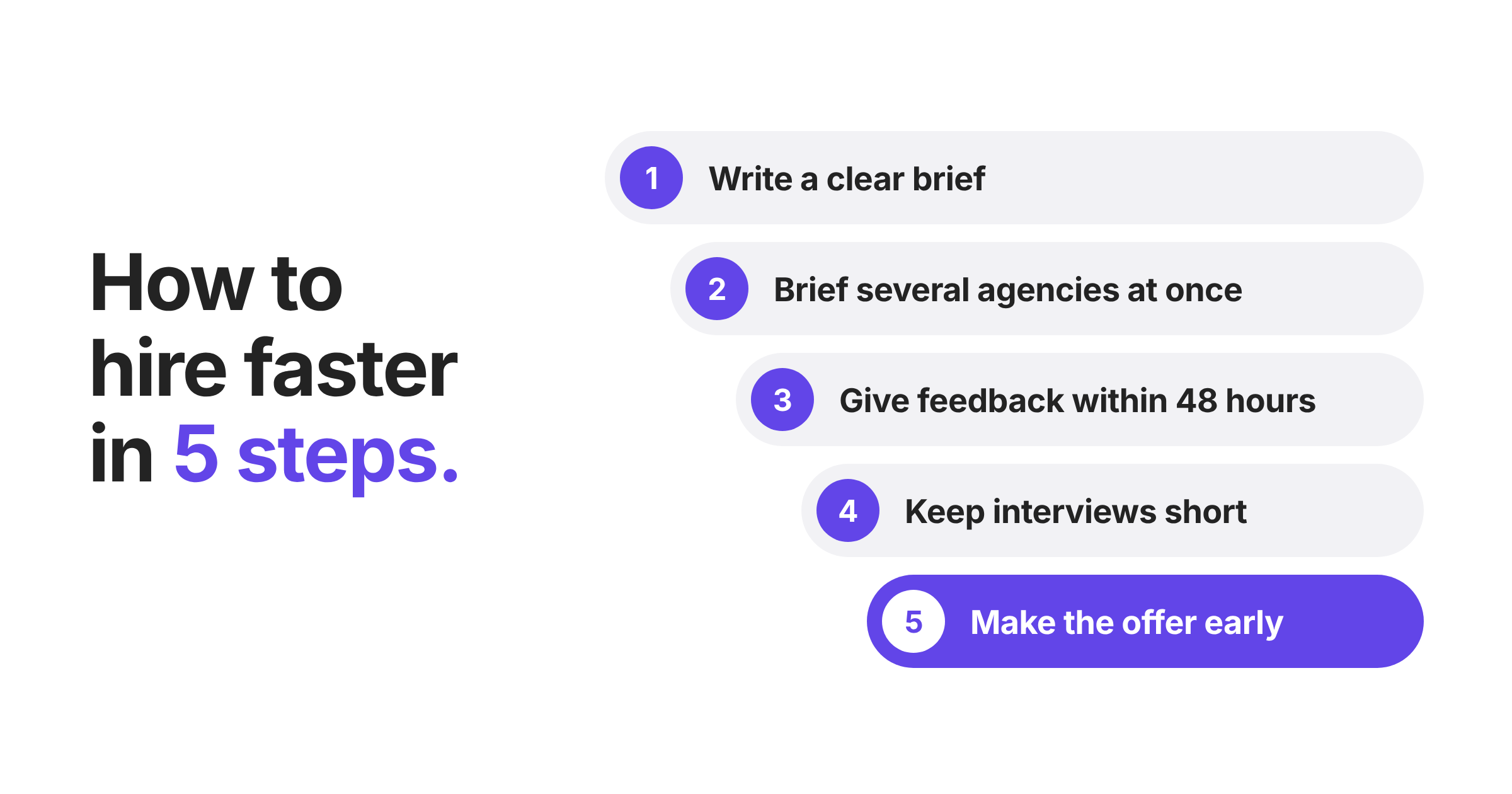
Here are five steps that shorten the wait. None of them need a new tool or a big budget. They need decisions and habits.
Step 1: Write a proper brief before you start
A weak brief is the most common reason a search drags on. When the recruiter does not know what you want, the first week of profiles is wasted.
A good brief has:
- The problem the person will solve in their first 90 days
- Three to five must-have skills, separate from nice-to-haves
- CTC range in INR
- Location and work mode
- The longest notice period you can accept
- Who decides, and how fast
Spend an hour on this. It saves weeks.
Step 2: Brief several agencies at the same time
Working with one agency at a time is slow. If the first agency does not deliver, you have lost weeks before you try the next.
Instead:
- Choose a few specialist agencies for the role
- Send the same brief and the same deadline to all of them
- Ask for a short screening note with every profile: what the person built, notice period, current and expected CTC, and reason for leaving
You will see more options in the first week, and you can see quickly which agencies understand the role.
Step 3: Agree a feedback rule and keep to it
Slow feedback is the biggest hidden delay. Candidates lose interest, and agencies keep sending profiles that miss the mark.
Set a simple rule:
- Every profile gets a yes or no within 48 hours
- Every interview gets feedback within one to two days
- A "no" always comes with one line on why
That one line is how agencies improve the next shortlist.
Step 4: Shorten the interview process
Every extra round adds days. Ask what each round is for. If two rounds test the same thing, merge them.
- Keep the number of rounds to what you really need
- Book the next round before the current one ends
- Let the same group of people interview, so schedules are easier to match
- Decide soon after the last round, while the candidate is still excited
Step 5: Make the offer early and fix the joining date
Good candidates hold several offers. A slow offer often loses to a faster one.
- Agree the salary range before the last interview, so you do not negotiate from zero
- Send the offer quickly after the decision
- Put the joining date in writing
- Keep in touch during the notice period
- Keep a backup candidate warm for important roles
A simple weekly check
Once a week, look at every open role and ask three questions:
- Is any profile waiting for our feedback?
- Is any candidate waiting for the next step?
- Does the brief still match what the market is giving us?
If the answer to the first two is yes, the delay is on your side. If the answer to the third is no, change the brief or the budget.
What not to do
- Do not add steps to feel safe. Extra rounds rarely add certainty.
- Do not wait for the perfect candidate. A strong match who joins is better than a perfect one who takes another offer.
- Do not change the brief mid-search without telling agencies. It restarts the work.
- Do not go silent. Candidates and agencies both need regular updates.
If you are a recruitment agency
You can shorten time-to-hire for your clients too:
- Ask for a clear brief before you start, and ask the questions that fill any gaps
- Send a screening note with every profile
- Confirm notice period and CTC expectations before you submit
- Follow up with candidates yourself, so the client does not need to chase
- Tell the client early if a candidate may drop out
Agencies that save a client time get more roles from that client.
Where a marketplace fits
A recruitment agency marketplace removes the time spent briefing agencies one by one. You post the role once and reach several specialist agencies in one system. Submissions are tracked to the agency that made them, and duplicates are flagged, so you spend your time reviewing profiles, not sorting them out.
The bottom line
Faster hiring is mostly about removing waiting. Write a clear brief, brief several agencies at once, give fast feedback, keep interviews short, and make the offer early. Do these five things well and you will lose fewer good candidates.
See how a recruitment agency marketplace works for your hiring. Book a free 20-minute demo.
Highring is a recruitment agency marketplace for companies and agencies. We are not a job board and do not accept direct resumes from candidates.