


The Rise of Flexi Staffing in India and What It Means for How Companies Hire
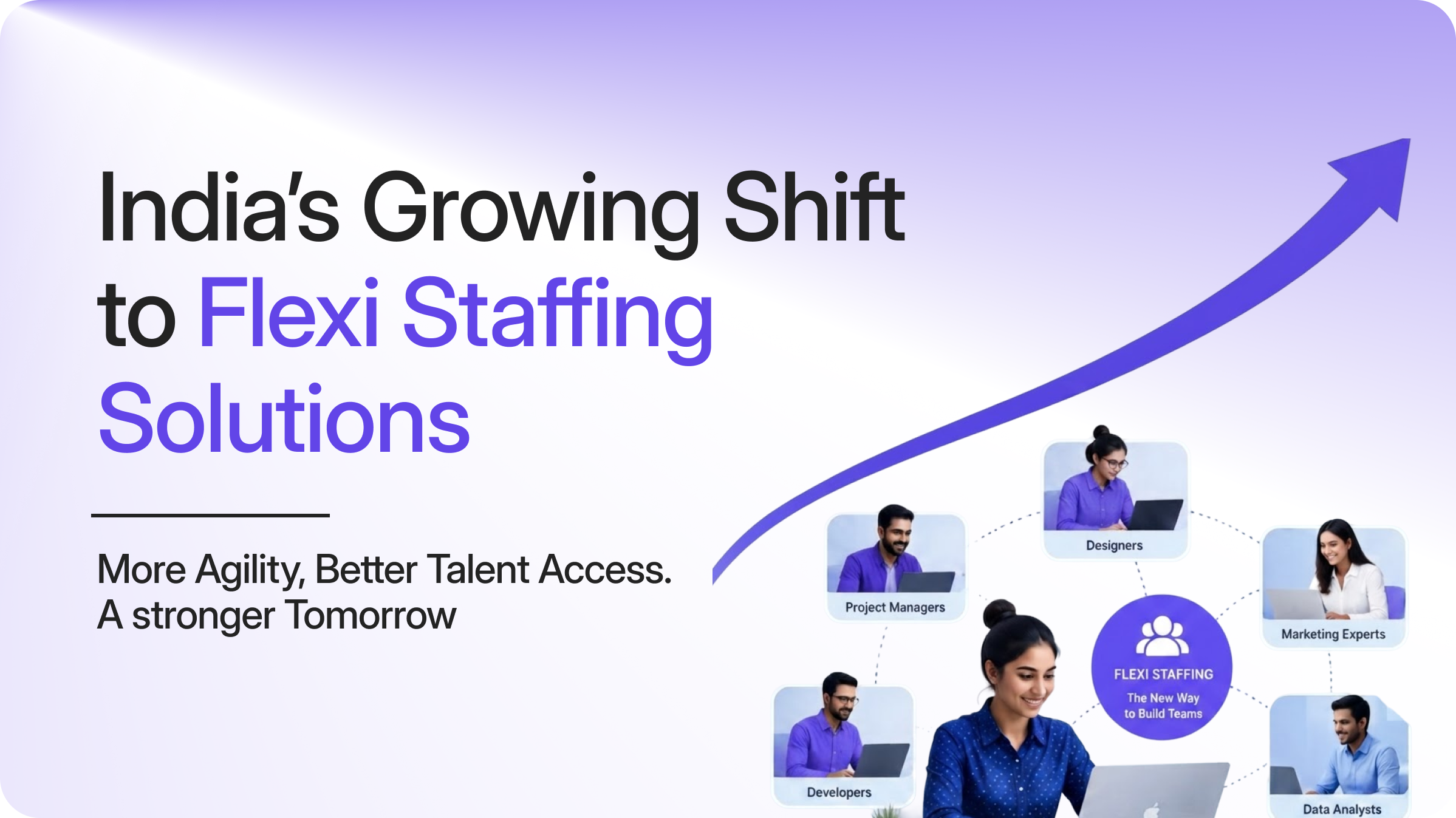
India's flexi staffing industry is growing at roughly 15% a year, as companies increasingly build workforces that mix permanent employees with contract and flexible talent. This isn't a fringe trend anymore it's becoming a standard part of how growing companies plan headcount, especially in tech, operations, and roles tied to project-based demand.
If you're building or scaling a team in 2026, there's a good chance your workforce strategy already includes some version of this blend, even if nobody's called it "flexi staffing" internally yet.
Why this shift is happening
A few forces are driving it at once. Demand for specialized skills AI, cloud, data is spiking faster than companies can build permanent headcount to match. Project-based work doesn't always justify a full-time hire. And after a few volatile years, many companies are simply more cautious about over-committing to fixed headcount before demand is proven out.
The result: companies are increasingly thinking about hiring as a portfolio decision some roles genuinely need a permanent hire, others are better served by contract or flexible talent, and getting that mix right matters as much as filling any single role well.
Where this gets complicated
Here's the part that trips a lot of companies up: permanent hiring and flexi staffing usually run through completely different processes, different vendors, and different internal owners. A company might have one agency relationship for permanent placements and an entirely separate arrangement sometimes a different vendor altogether for contract staffing. That's two systems to manage, two sets of relationships to maintain, and no single view of the total hiring picture.
Many recruitment agencies today actually offer both permanent placement and flexi staffing as services but companies often don't structure their vendor relationships to take advantage of that overlap, defaulting instead to separate processes for each.
Where a recruitment agency marketplace fits into this
To be direct about scope: Highring is built for permanent hiring companies post a role, get matched with vetted recruitment agencies, and pay only when someone actually joins as an employee. That's the core model, and it's worth being clear about rather than overstating.
But here's the practical connection: getting your permanent hiring right, and doing it efficiently, is what frees up the bandwidth to think clearly about the rest of your workforce mix. When permanent hiring runs through ten scattered agency relationships with no coordination, companies often default to over-relying on contract staff simply because permanent hiring feels too slow or too chaotic to manage well. Fixing the permanent-hire side of the equation — one system, vetted agencies working in parallel, clear visibility into every requisition makes it easier to make a deliberate choice about which roles should be permanent and which should be flexible, instead of defaulting based on which process is less painful.
The bottom line
Flexi staffing isn't replacing permanent hiring it's becoming a deliberate complement to it, and the companies managing this well are the ones treating workforce planning as a real strategic mix, not an ad hoc patchwork. Whatever your mix ends up being, the permanent-hire side of it deserves the same structure and visibility as everything else in your workforce plan.
See how structured permanent hiring works on Highring. Book a free 20-minute demo.
Highring is a recruitment agency marketplace for companies and agencies. We are not a job board and do not accept direct resumes from candidates.